
ALEA
ALEA
ALEA: A place of well-being where individuality becomes visible.
ALEA conveys a sense of warmth, comfort and quiet individuality. True to its name – meaning “noble form” – the single-family house embodies a refined and distinctive presence.
Best of Interior 2026
We are delighted that our architect-designed house ALEA has been nominated for the renowned Interior Design Award “Best of Interior 2026”.
The competition annually recognizes outstanding residential concepts and interior design projects distinguished by their architecture, design, and materiality. Being part of this selection is a great honor for us. This nomination represents both a special recognition and a sincere appreciation for everyone involved in bringing this project to life.
Discover the interior architecture
Held in quiet restraint
Single-family residence | Location: hillside site | Gross floor area: 359 m² | Volume: 1,776 m³ | Plot size: 720 m² | Rooms: 7.5 rooms | Construction: Masonry construction
A single-family house designed for family life, conceived with openness and a calm spatial order. The spaces support and accompany everyday routines without prescribing them. Light, material, and proportion form a subtle interplay, creating a framework in which contemporary family living can unfold naturally.
Offset calm
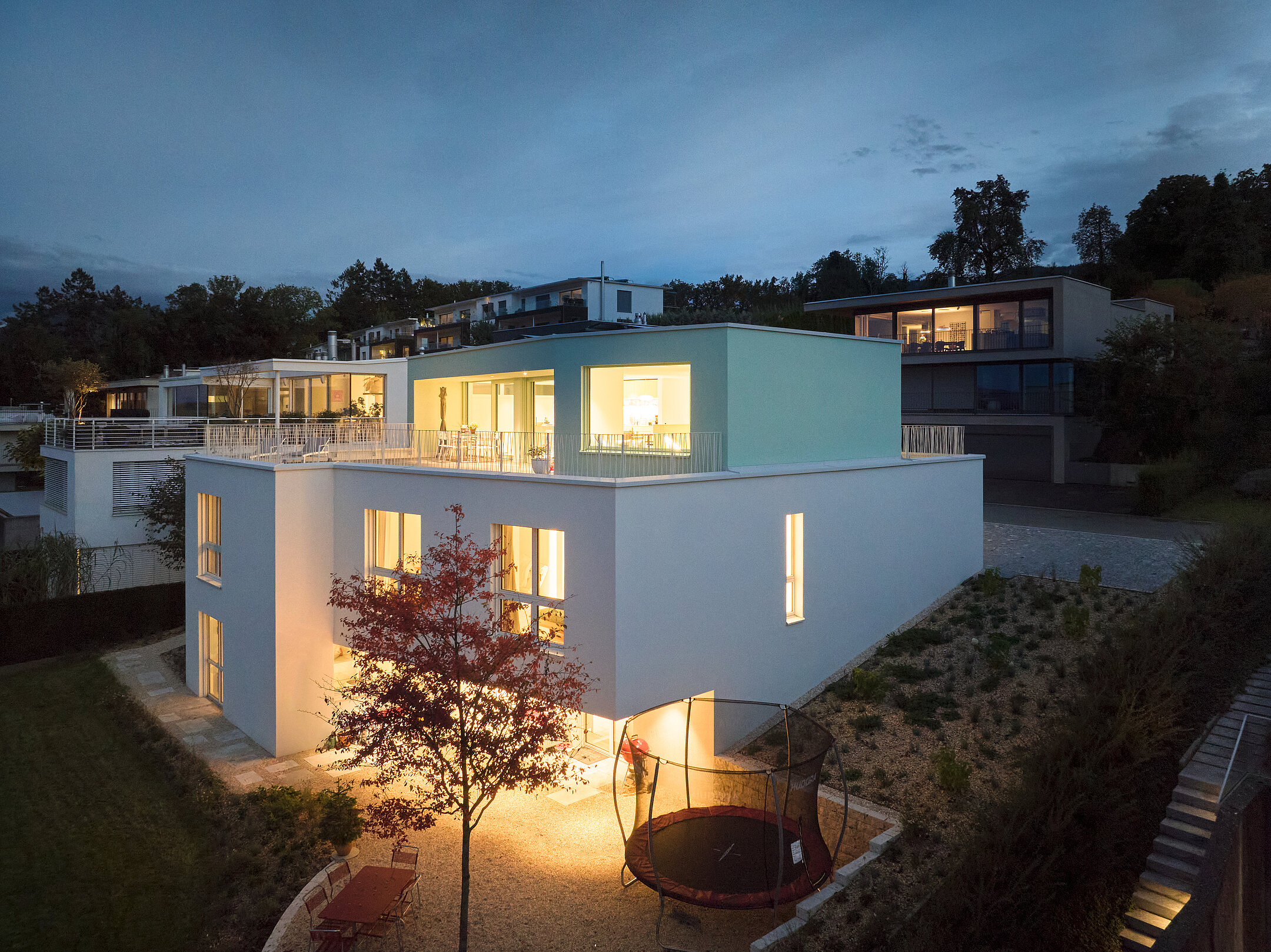
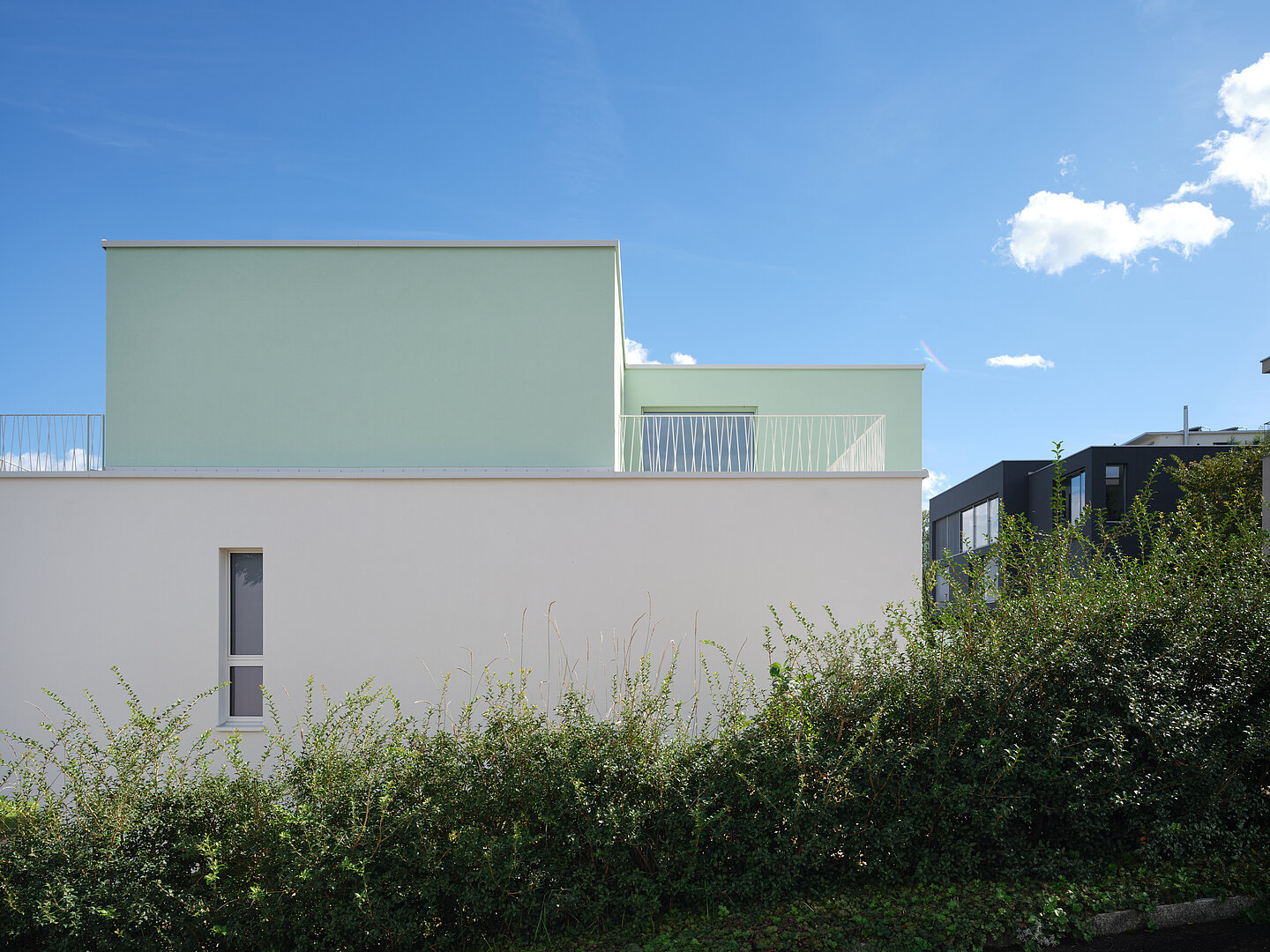
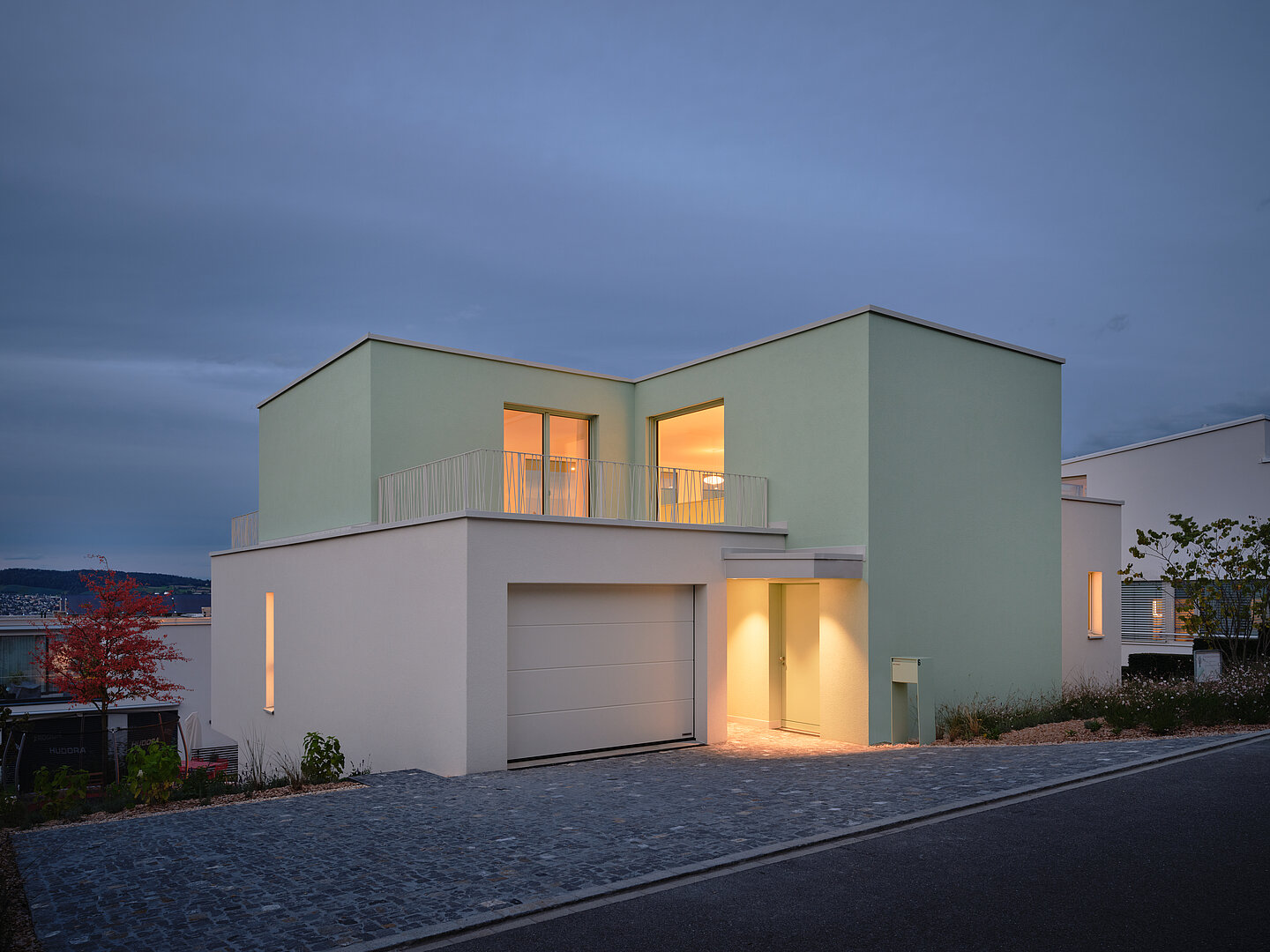
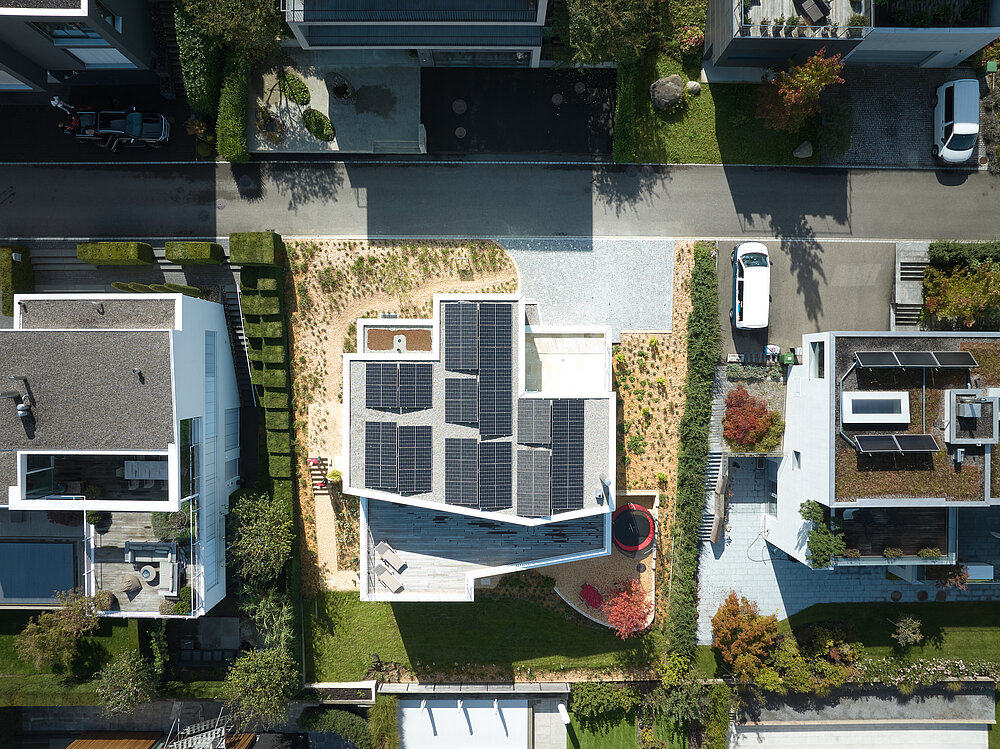
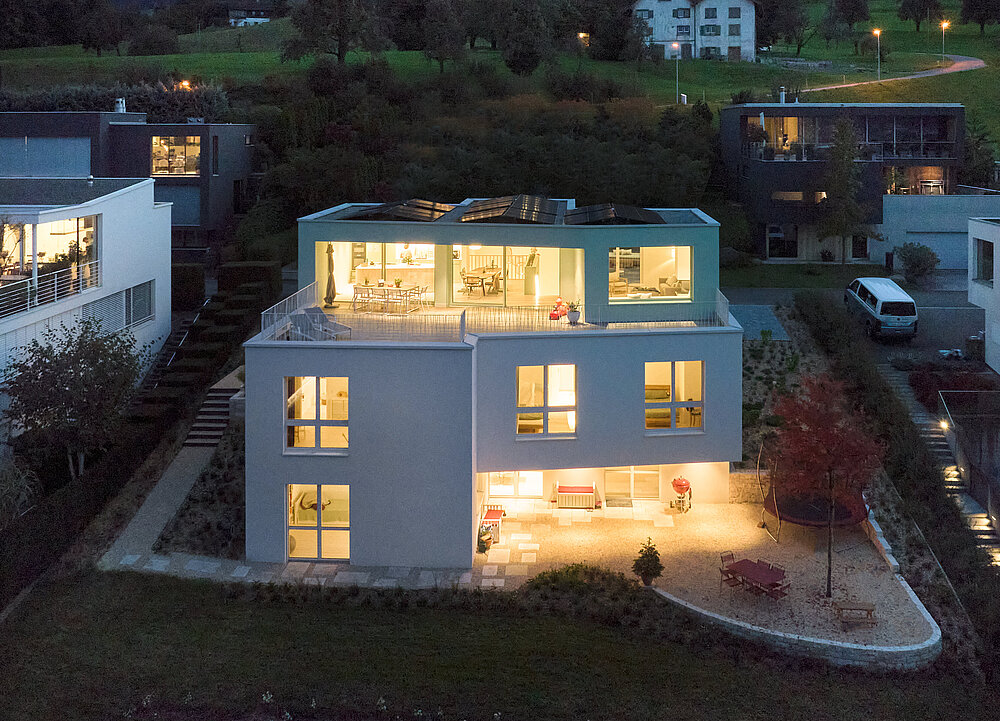
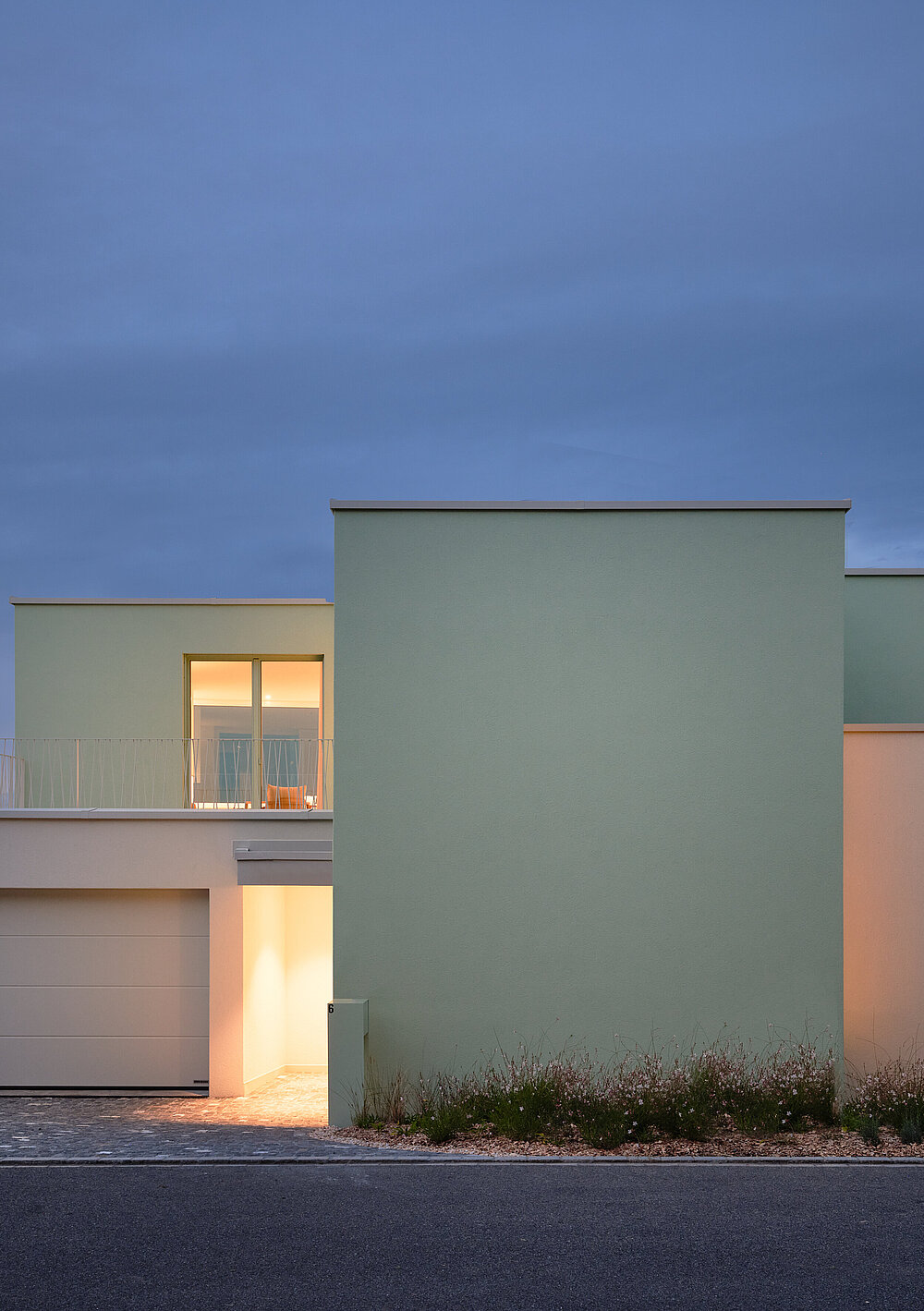
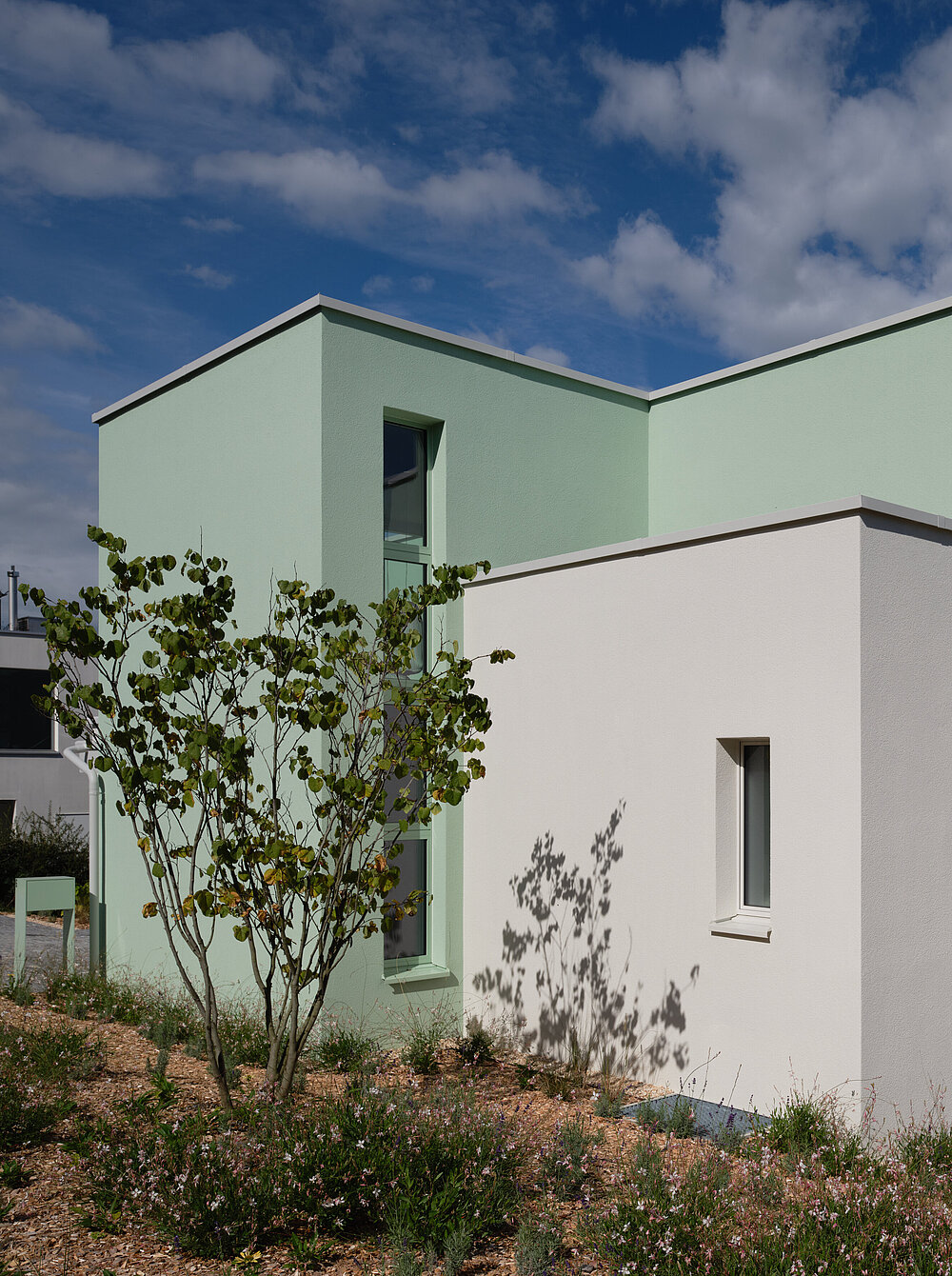
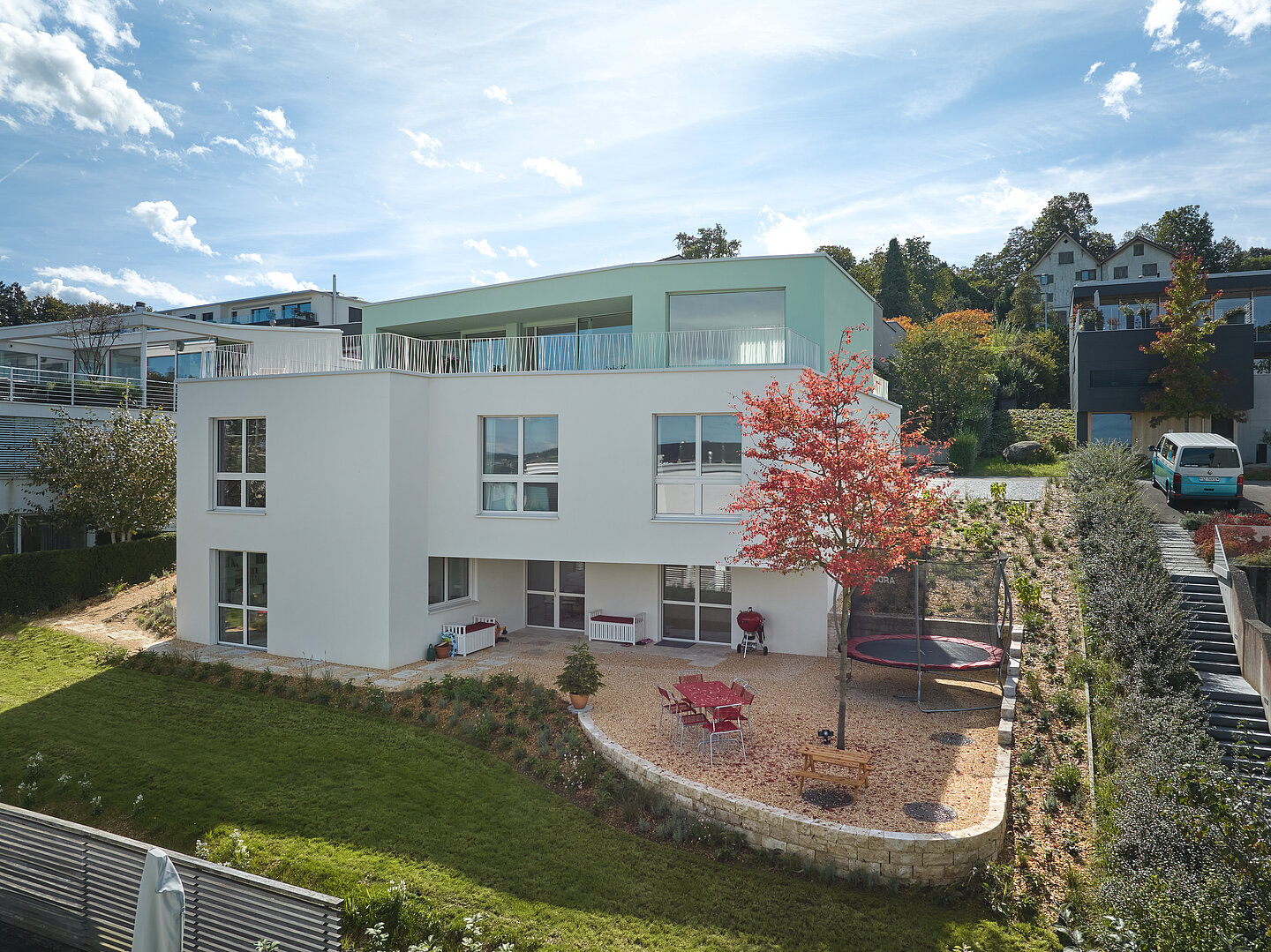
The building responds sensitively to the hillside site, developing across staggered levels. Toward the street, it appears restrained and composed, while opening toward the landscape. This creates contrasting spatial conditions for the family, offering protection on one side and openness on the other. Subtle shifts in geometry introduce movement into the volume and make this tension perceptible in everyday use.
The entrance as the center
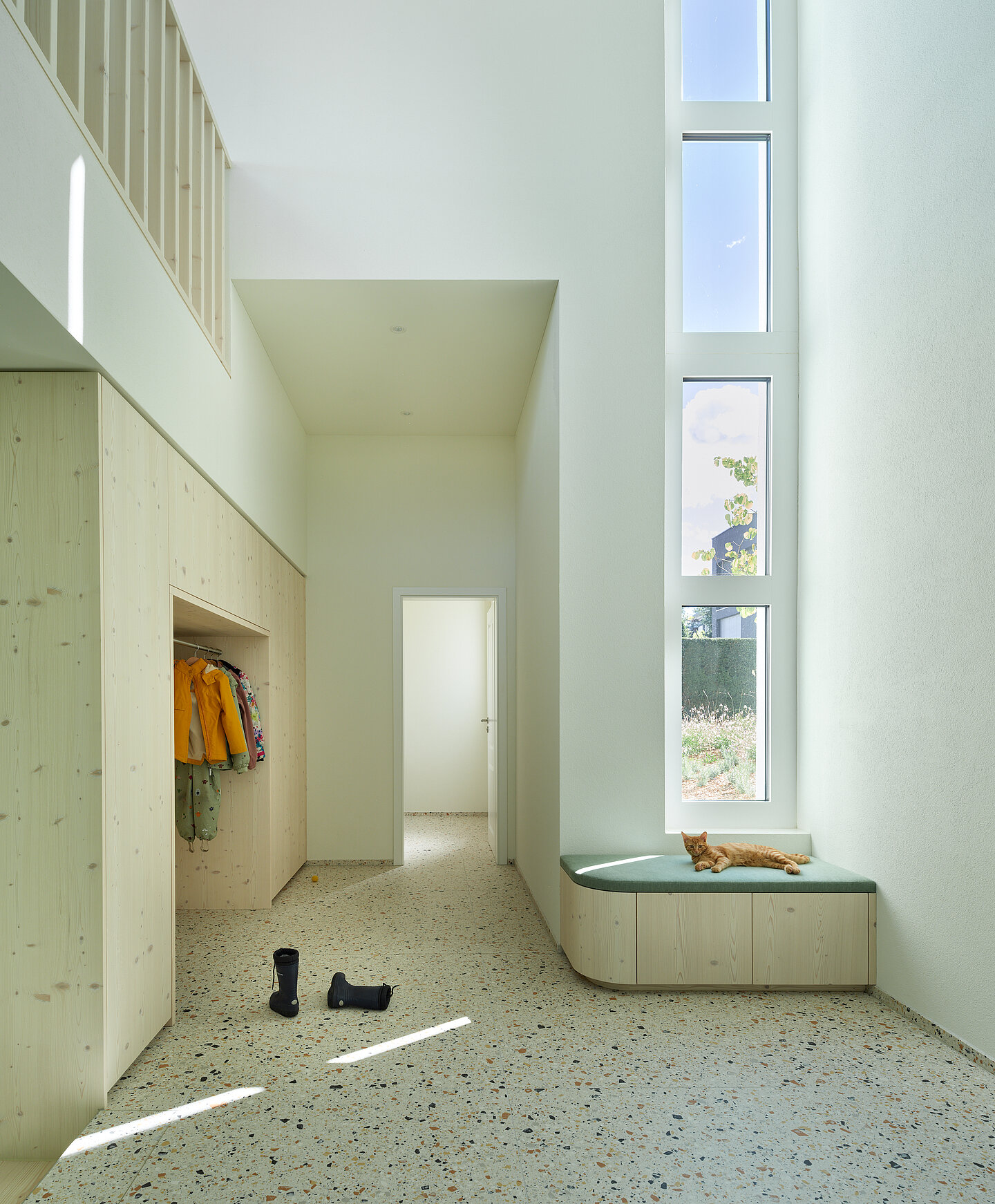
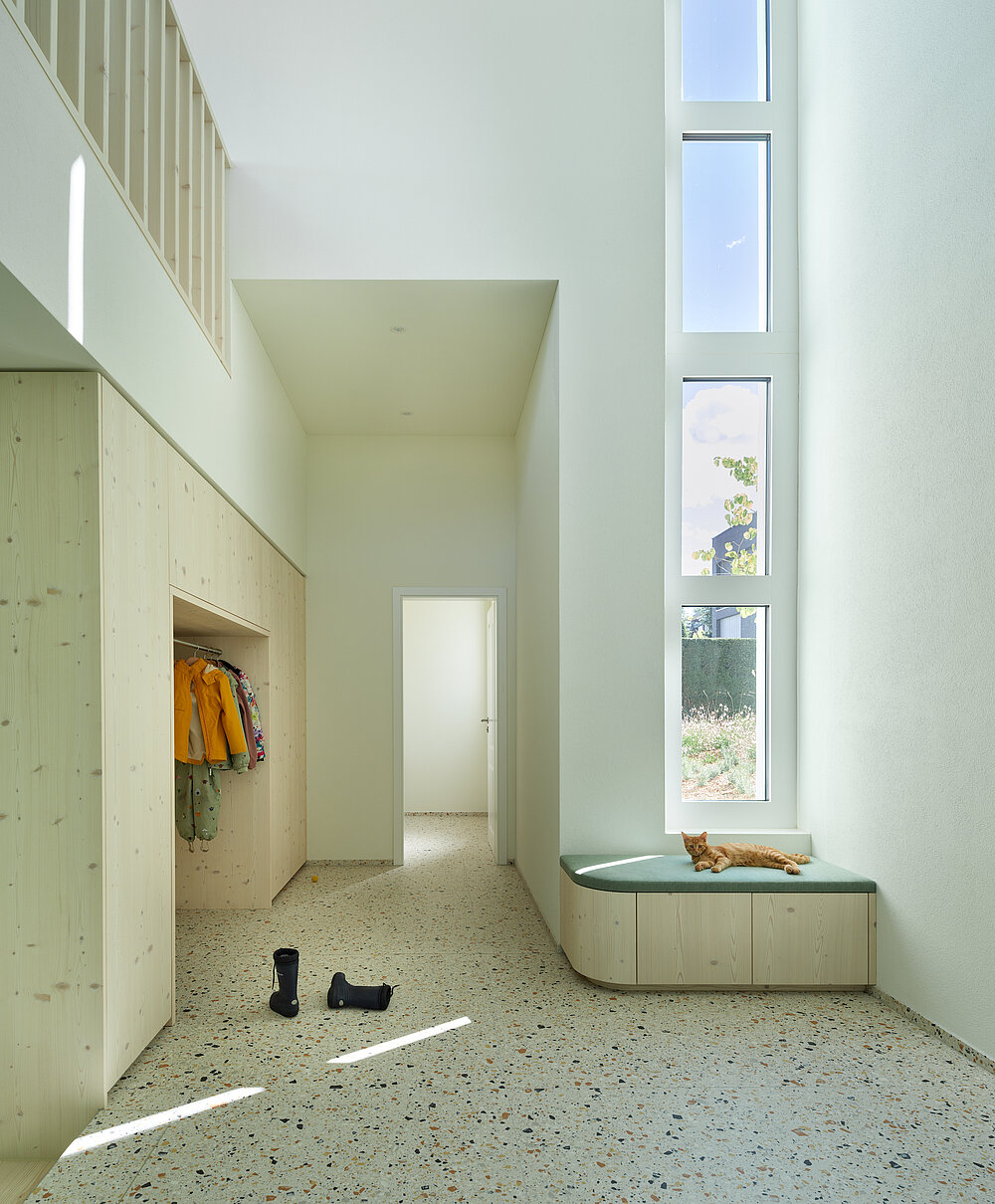
The entrance level accommodates the private areas of the family. Rooms are arranged around a central hall that serves both as circulation and as a shared space. Proximity and exchange arise naturally, while offering spaces of retreat as well. Circulation is direct, and transitions are fluid, following a clear spatial organization.


The house as a whole
A double-height space connects the levels and maintains visual relationships within the family. Movement through the house remains perceptible, with sightlines linking the floors. Daylight accompanies the ascent and unifies the levels into a coherent whole, forming a central theme of the architecture.
Transition to the outdoors
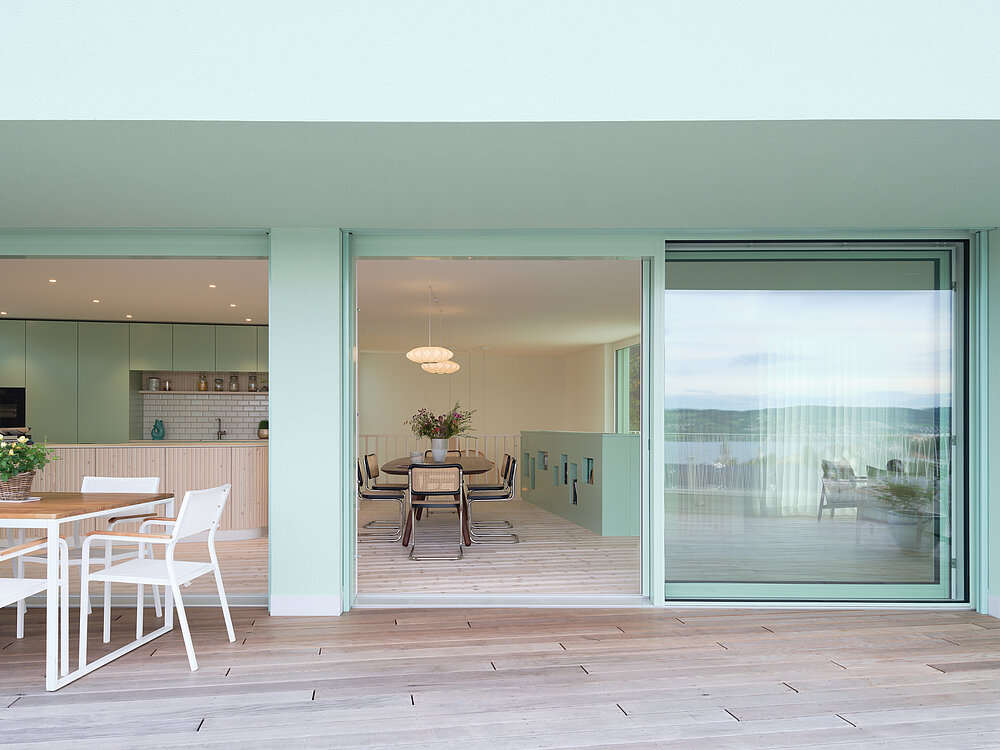
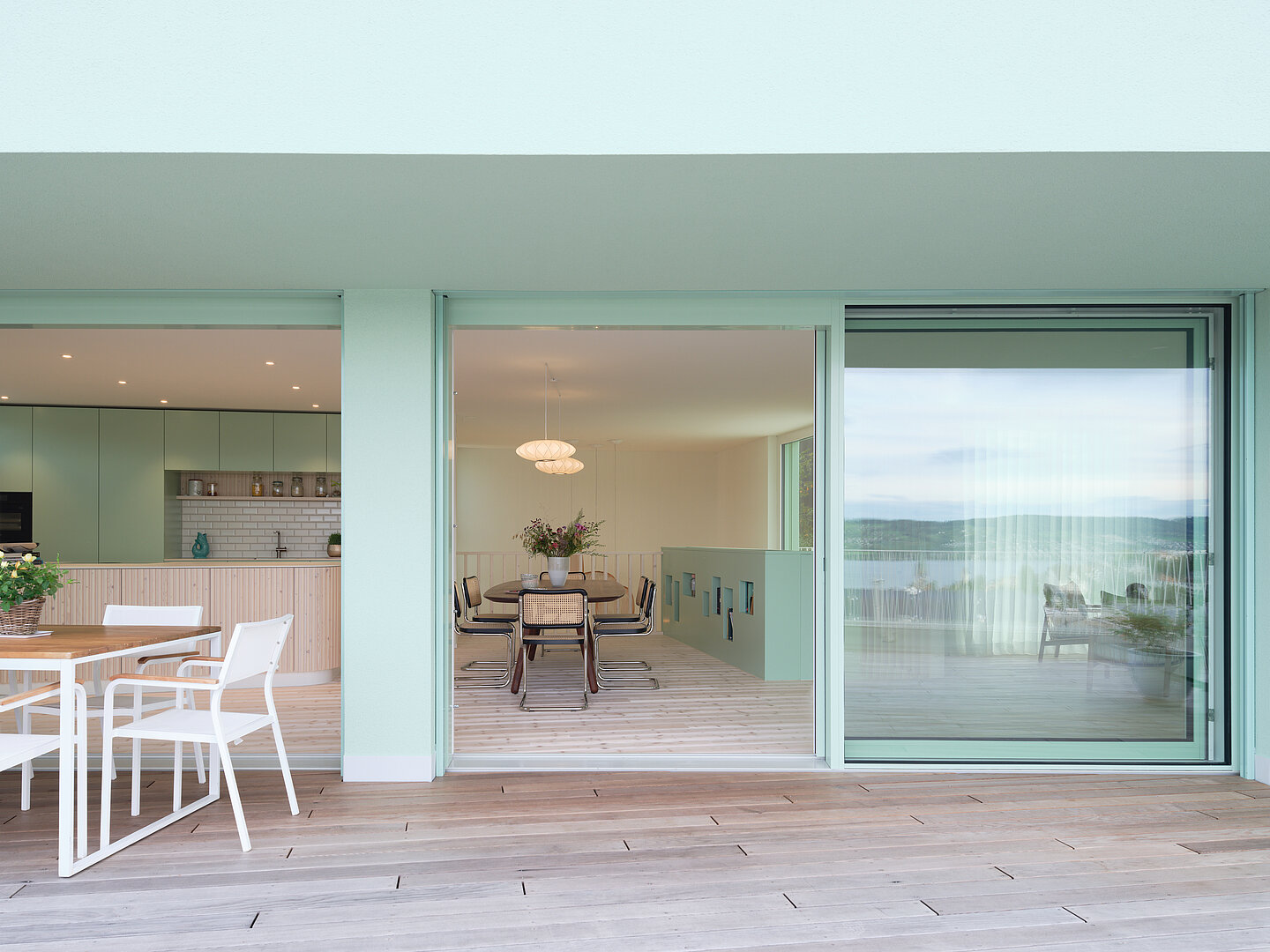
On the upper floor, daily family life unfolds within an open-plan layout. Cooking, dining, and living merge into a continuous space that encourages interaction while allowing for moments of retreat. The terrace extends the living area outward, integrating the surrounding landscape into everyday life.
Accompanying architecture
On the garden level, spaces are dedicated to individual activities such as movement, music, play, and rest. Light materials, wooden surfaces, and subtle colour accents shape the atmosphere. The result is a contemporary residence that does not stage family life but quietly supports it, open and protective at once, and able to evolve over time.
![[Translate to English:] Das Einfamilienhaus ALEA in der Aussenansicht, Garten](/fileadmin/_processed_/9/8/csm_DJI_0891_ccb13933cb.jpg "[Translate to English:] Einfamilienhaus ALEA")
![[Translate to English:] Das Einfamilienhaus ALEA in der Aussenansicht, Strassenseite](/fileadmin/_processed_/1/6/csm_DSCF6697_adb991161d.jpg "[Translate to English:] Einfamilienhaus ALEA")
![[Translate to English:] Das Einfamilienhaus ALEA in der Aussenansicht, Strassenseite](/fileadmin/_processed_/e/b/csm_DSCF6695_1_93e6778fa2.jpg "[Translate to English:] Einfamilienhaus ALEA")
![[Translate to English:] Das Einfamilienhaus ALEA in der Aussenansicht, Drohnenaufnahme](/fileadmin/_processed_/6/8/csm_DJI_0905_1_5bbef1757f.jpg "[Translate to English:] Einfamilienhaus ALEA")
![[Translate to English:] Das Einfamilienhaus ALEA in der Aussenansicht, Garten](/fileadmin/_processed_/1/7/csm_DJI_0921_d8b641445c.jpg "[Translate to English:] Einfamilienhaus ALEA")
![[Translate to English:] Das Einfamilienhaus ALEA in der Aussenansicht, Garten](/fileadmin/_processed_/0/5/csm_DJI_0926_805cac2a7e.jpg "[Translate to English:] Einfamilienhaus ALEA")
![[Translate to English:] Das Einfamilienhaus ALEA in der Aussenansicht, Strassenseite](/fileadmin/_processed_/0/d/csm_DSCF6858_0de5a56093.jpg "[Translate to English:] Einfamilienhaus ALEA")
![[Translate to English:] Das Einfamilienhaus ALEA in der Aussenansicht, Strassenseite](/fileadmin/_processed_/a/6/csm_DSCF6860_a912ca8b0d.jpg "[Translate to English:] Einfamilienhaus ALEA")
![[Translate to English:] Das Einfamilienhaus ALEA in der Innenansicht, Eingangsbereich](/fileadmin/_processed_/e/a/csm_DSCF6680_Panorama_d56914717f.jpg "[Translate to English:] Einfamilienhaus ALEA")
![[Translate to English:] Das Einfamilienhaus ALEA in der Innenansicht, Wohnzimmer](/fileadmin/_processed_/8/b/csm_ALEA5380_1fdace8b4d.jpg "[Translate to English:] Einfamilienhaus ALEA")
![[Translate to English:] Das Einfamilienhaus ALEA in der Innenansicht, Essbereich](/fileadmin/_processed_/d/5/csm_ALEA5438_10d3f011a9.jpg "[Translate to English:] Einfamilienhaus ALEA")
![[Translate to English:] Das Einfamilienhaus ALEA in der Innenansicht, Badezimmer](/fileadmin/_processed_/f/7/csm_ALEA5226_1ac41bb52a.jpg "[Translate to English:] Einfamilienhaus ALEA")