BRAHMA
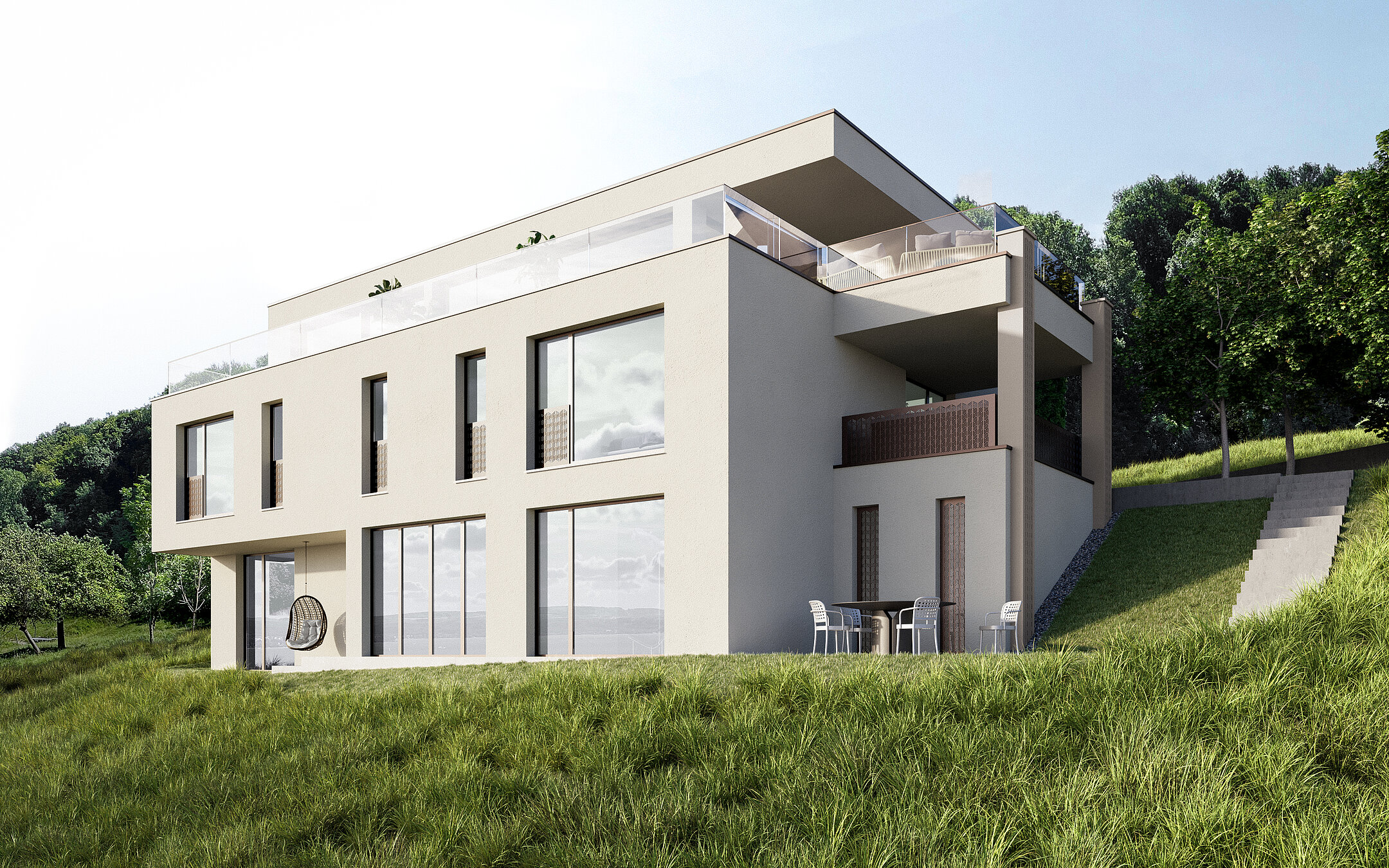
BRAHMA
Single-family house BRAHMA: A Trinity of Architecture, Landscape, and Living
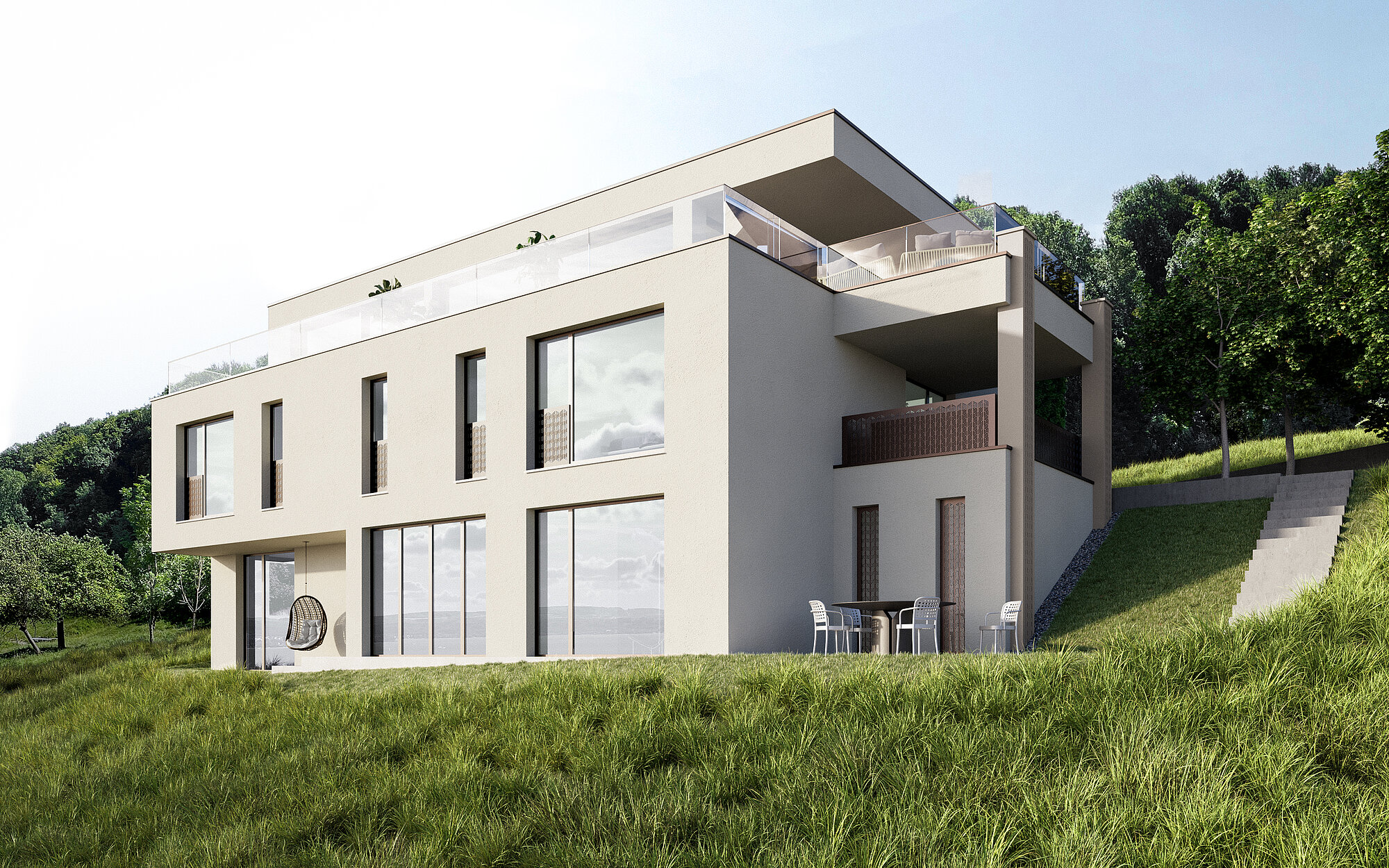
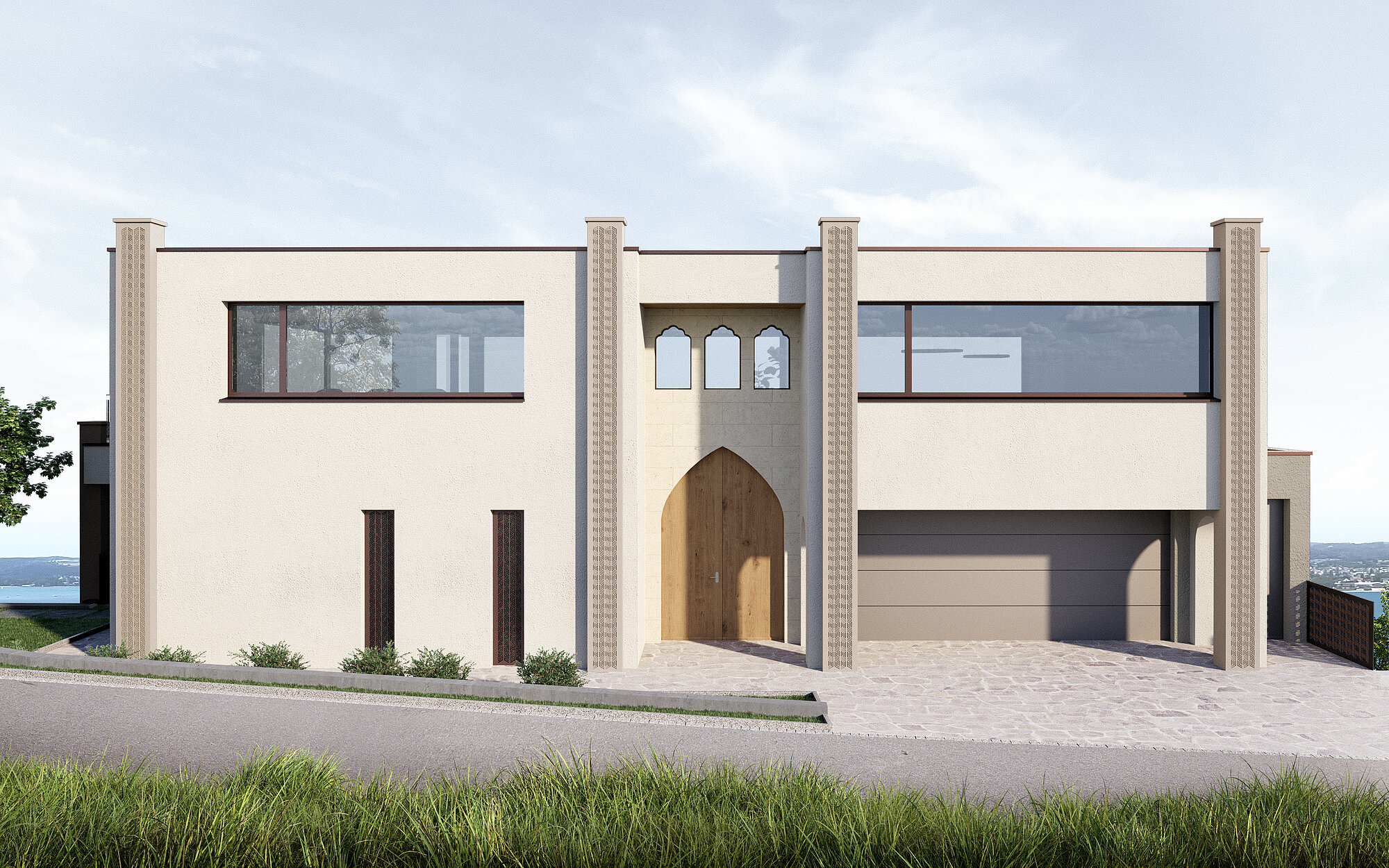
Drawing inspiration from the principles of Indian temple architecture, the design creates a living environment defined by clarity, generosity of space, and a profound relationship with the landscape.
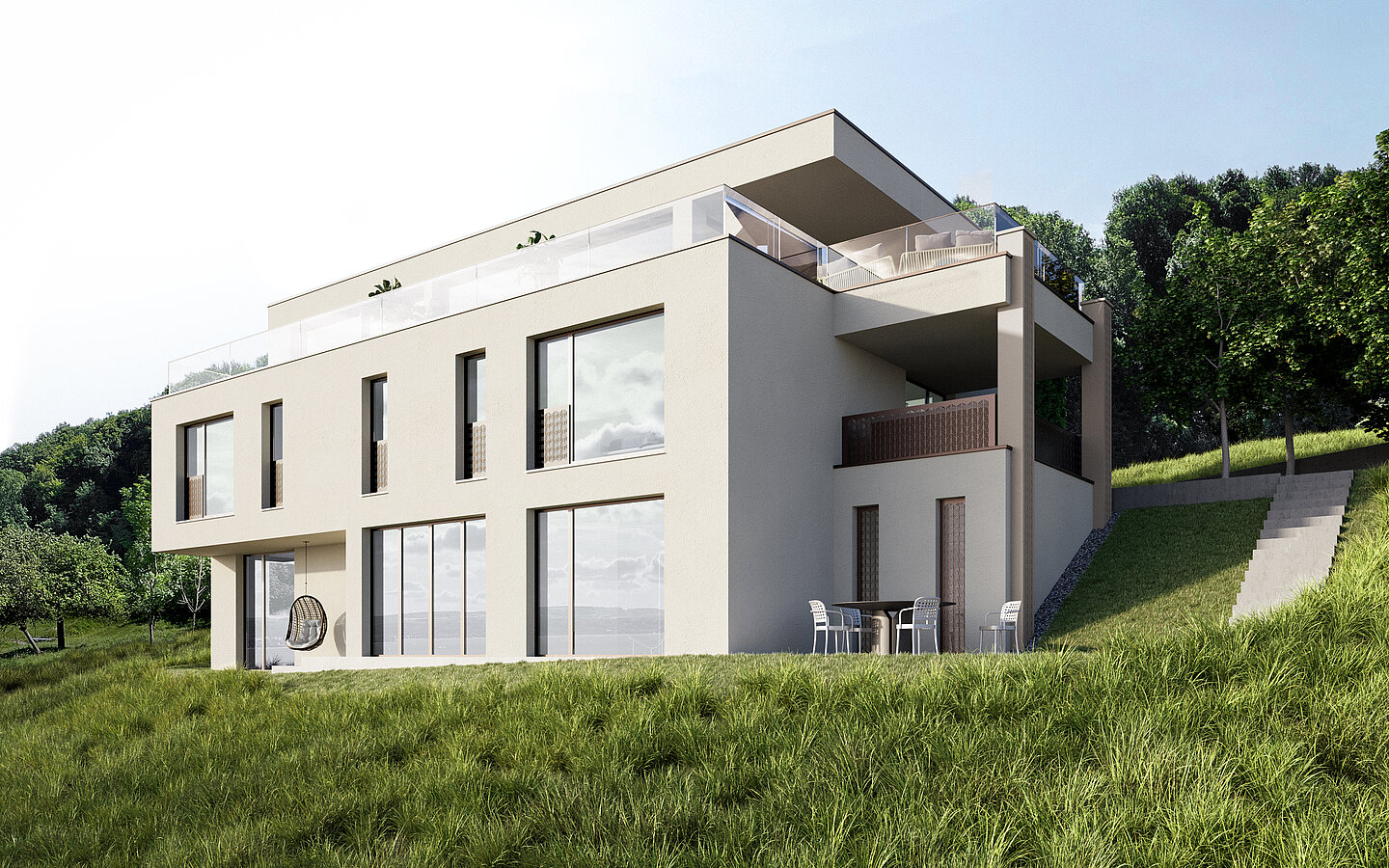
Space and Harmony
Single-Family House | Location: A quiet hillside location on the edge of the forest with a view of the lake | Living Area: 424 m² | Volume: 2'172 m³ | Rooms: 7.5 | Construction: Solid construction
A residence that brings together contemporary architecture, Hindu symbolism, and nature in a harmonious composition. The BRAHMA project reinterprets the principles of Indian temple architecture for the present day, translating its spiritual foundations into a contemporary living concept. Named after Brahma, the Hindu god of creation, the three-storey residence draws its architectural identity from themes of creation, balance, and interconnectedness, shaping a living environment that is both meaningful and timeless.
Hillside Architecture
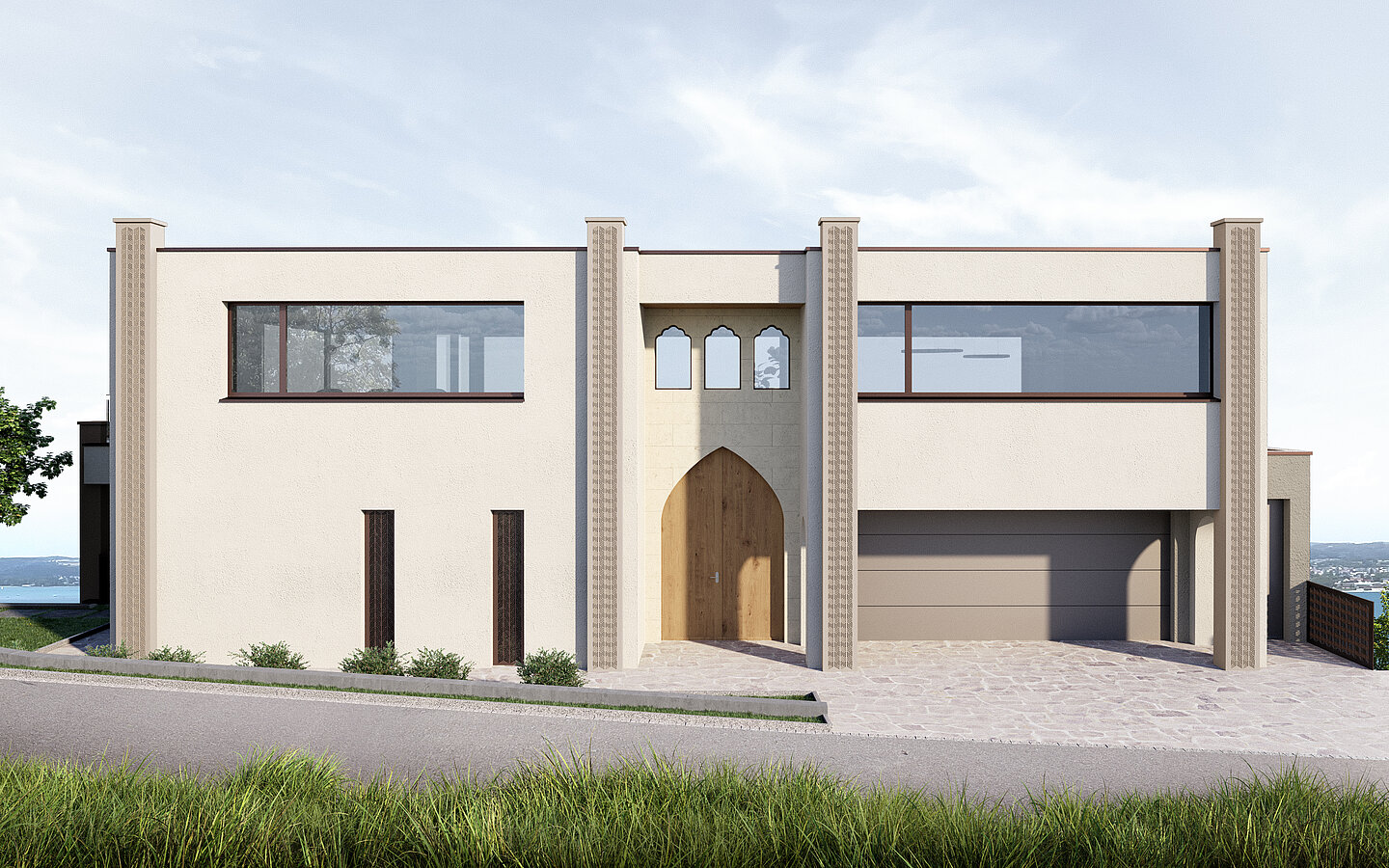
Set on the edge of the forest with sweeping lake views, the site establishes a strong connection between the residence and its natural surroundings. Due to the northward-sloping terrain, the main entrance is positioned on the first floor. A generous double-height entrance hall forms the spatial heart of the home, organising the floor plan and dividing the residence into three distinct functional living areas.
Vertical Spatial Composition
The vertical organisation of the residence follows a clear spatial hierarchy. The lower ground floor, partially embedded into the hillside, accommodates wellness and retreat areas, including a spa, swim spa, and sauna, all opening towards the garden through expansive floor-to-ceiling glazing.
The entrance level contains the private living quarters, comprising a lobby, guest suite, music room, and two bedrooms, each with its own dressing area and en-suite bathroom.
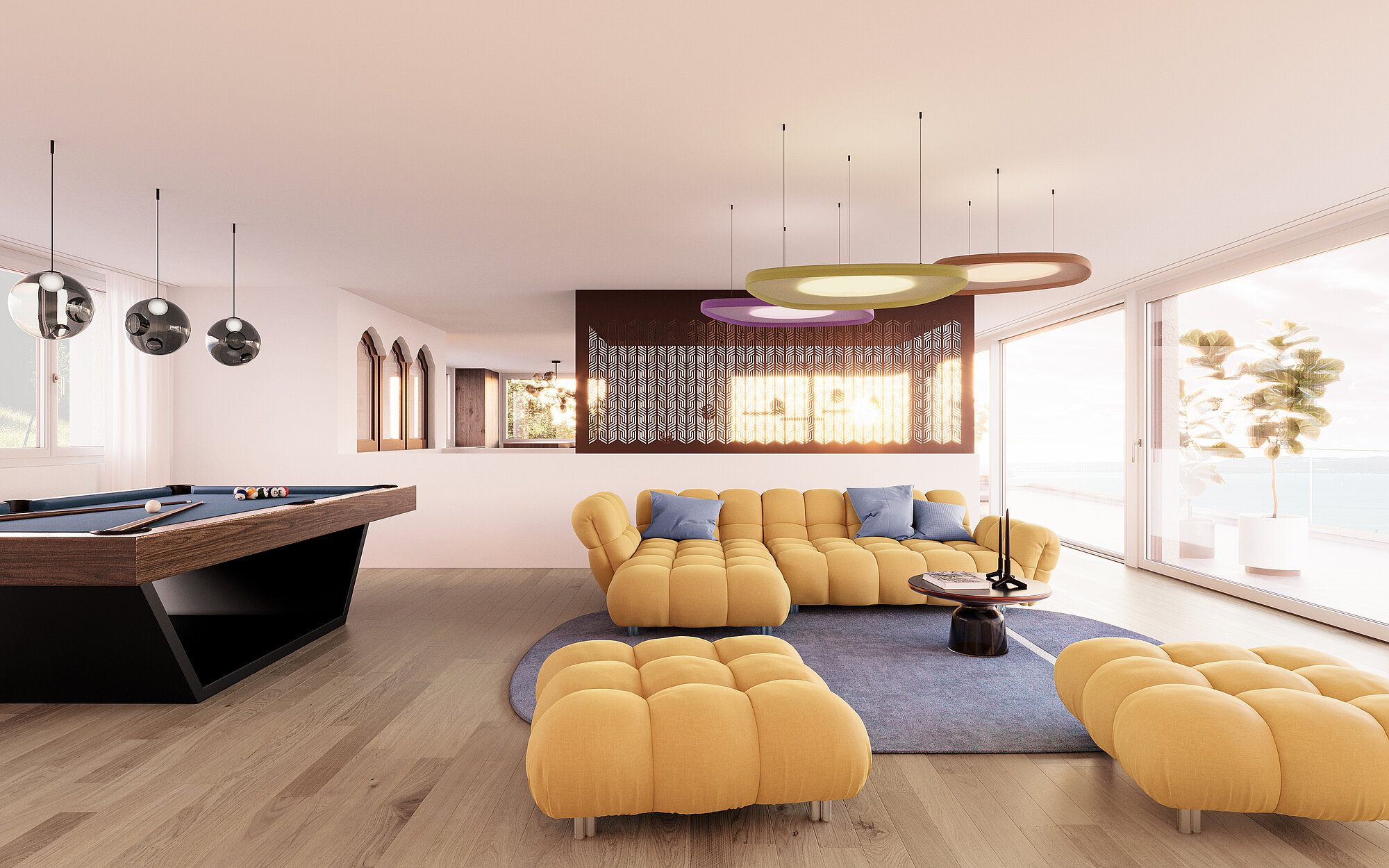
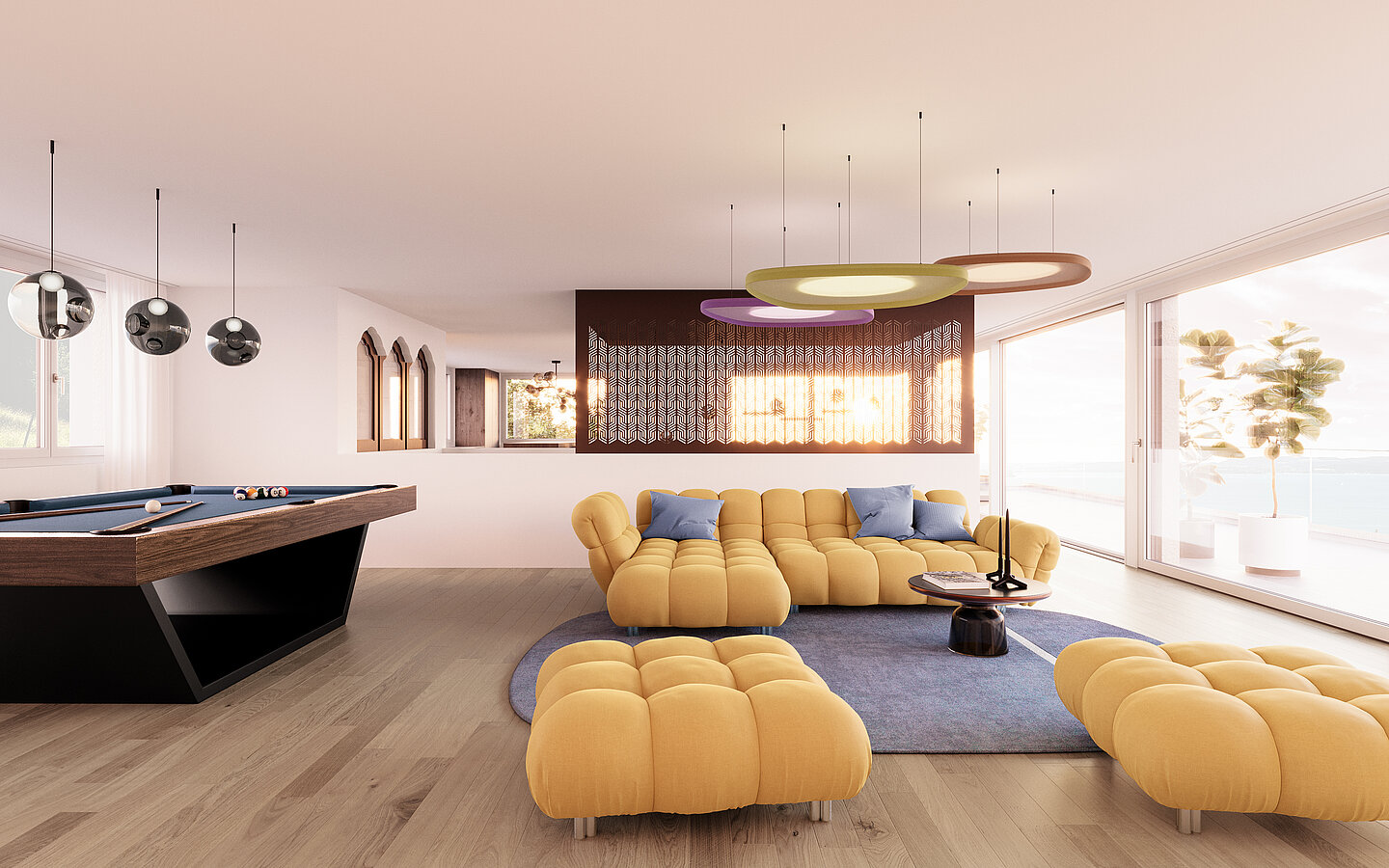
At the top, the penthouse level forms the social heart of the home, bringing together the kitchen, dining, and living areas. This open-plan space extends onto a generous terrace, offering panoramic views across the lake and surrounding landscape. A double-height void connects the levels vertically, enhancing the sense of openness and reinforcing the spatial generosity of the contemporary architecture.